

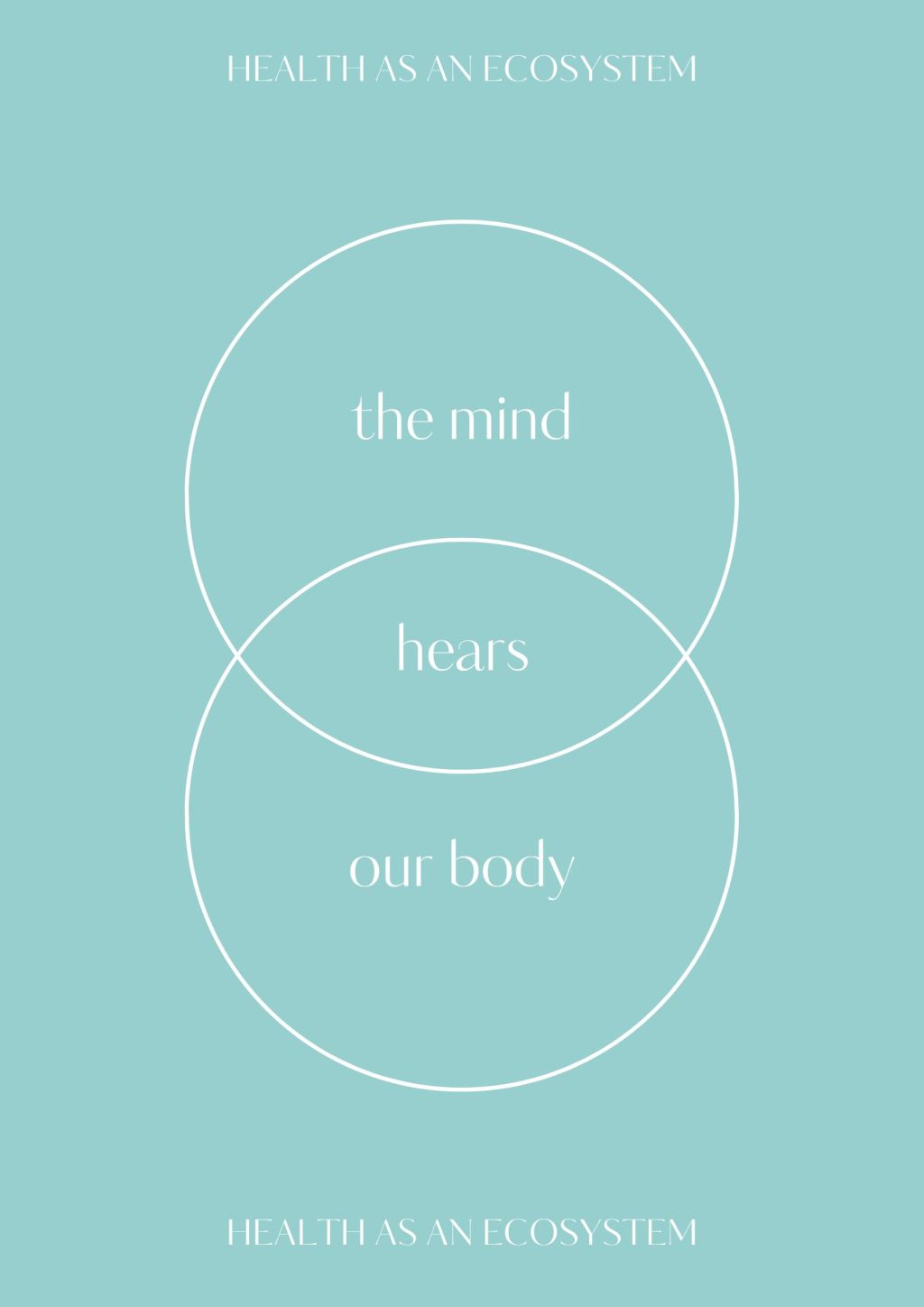
Our bodies are our brains, and over time, culturally, we’ve conceptually and deeply separated them. Little do we understand that our bodies are doing 95 percent of the work of our humanness— invisibly, quietly, and pervasively. When we have anxiety, depression, and other invisible, painful symptoms, this is often the last stage of a much longer process: patterns that have been running in the body for a long time.
Many individuals I am honored to care for have lost touch with their bodies through unconscious patterns of enmeshment from well-meaning caregivers over time. Enmeshment simply means there is a lack of individual autonomy—over time, we lose ourselves in the intentions and expectations of others. While we naturally crave connection, enmeshment is a more profound loss of identity and emotional fusion.
The roots of enmeshment are often generational, passed on from one family to the next. Whether it began as a crisis of scarcity, a lack of trust, or decades of insecure attachment, it continues to run its course—except when individuals in the family, intuitively or with intention, flip the script to individuate securely. Often, these family groups look close-knit to outsiders, while unhealthy patterns persist privately.
To be clear: there are cultures that prioritize the collective, where the group is more important than the individual. It’s important not to pathologize a more female-centered emphasis on relationship. These cultures often have clear roles and expectations. In enmeshed families, however, roles and boundaries become deeply blurred— and the blurriness is the root of the confusion and pain.
It’s important to conceptualize enmeshment from a body standpoint. In an enmeshed dynamic, we don’t know where “I” begin and end, and where my parent/partner/friend/coworker begins and ends. My physical and emotional needs get lost in a soup of others’ needs. I feel others’ feelings (in my body) and prioritize them over my own. So over time, I erase my connection to my body and feelings.
Because we’ve been disconnected from our bodies for so long, we unconsciously seek out “body hits.” These can look like food addiction, porn or sex addiction, and substance use disorders—forms of maladaptive soothing where each activity delivers a primal and direct “hit” to the body. And often, because we haven’t processed hurt or confusing emotions in our minds, they show up as physical pain: migraines, back/neck pain, stomach upset, and chronic tension. Sometimes when we have an emotional response during interactions with family members, we also have somatic responses—feeling drained, lethargic, anxious, or dysregulated afterward.
Often we use food as a protest in an enmeshed relationship. This is generally an unconscious coping mechanism, using disordered eating patterns (eating in secret, binging, restricting) to rebel against an overwhelming sense of lack of control, lack of boundaries, and emotional suffocation. These are typically silent protests—attempts to assert physical autonomy in a relationship that denies the individual a stable sense of self.
Key Features of Relational Enmeshment That Run Their Course in the Body
Over time, these dynamics can produce distorted self-perception and difficulty with emotion management:
Lack of boundaries: Enmeshed individuals have difficulty recognizing where they end and others begin. Privacy is limited, as thoughts, feelings, and experiences are shared indiscriminately.
Smothering: While enmeshment can feel highly supportive because of its closeness, it is often experienced as suffocating due to high intensity and poorly defined limits. Individuals feel they are never truly alone or able to explore their identities, interests, and aspirations without anticipating the family’s reaction. Many who try to form intimate relationships outside of family life begin intensely, then quickly feel smothered.
Low self-worth / underdeveloped sense of self: With a lifetime focus on anticipating and accommodating others’ emotions, enmeshed individuals struggle to identify authentic preferences and values. A person may feel unable to describe who they are outside of the family system. Personal goals, desires, and individuality become overshadowed by the collective identity.
Guilt and anxiety around being oneself (i.e., “individuation” in clinical parlance): Attempts to establish healthy boundaries are often met with resistance, guilt-tripping, or emotional blackmail. Expressing differing opinions or desires is treated as betrayal.
Chronic people-pleasing: Enmeshed individuals learn to subordinate their needs to keep the peace and secure love. This self-abandoning pattern persists into adulthood. To be clear, “people pleasing” can be a natural, intuitive byproduct of our desire to connect; chronic people-pleasing, however, is typically rooted in fear of abandonment and a lack of felt safety.
Emotional reactivity: Enmeshed individuals are hyper-attuned to others’ emotional states and feel compelled to manage or stabilize them, creating a cycle of dysregulation. Poorly measured or avoided emotions often result in anxiety and depressive symptoms.
Fear of abandonment: When self-worth is built on preserving enmeshed bonds, any move toward healthy separation can trigger intense abandonment fear.
How to Evolve the Ties That Bind
How we soften the “hit” to our bodies, embrace our true self (body and mind), feel safe in our surroundings, and recognize that intimate relationship does not equal smothering, disorientation, or loss:
Discover who you are
In more formal clinical language, we call this differentiation—learning how to notice and honor one’s own feelings, needs, and thoughts. An essential part of this is self-attunement: the ability to notice, name, and compassionately tend to your internal experiences without needing others to approve of them or track them for you.
Learn skills to make boundaries
Once we discover who we are more clearly and trust our internal compass, we practice assertive communication, tolerating disapproval, and reclaiming personal authority. Over time, practicing self-compassion and internalizing emotional safety fosters healthier interdependence with others.
Reduce guilt by writing a new narrative
Guilt is a core feature of enmeshment, and we know we are healing when we trust ourselves to make choices that honor both mind and body. Rewriting one’s narrative to highlight healing, capacity to thrive, and resilience—where guilt softens into gratitude—speaks to integration of lived experience.
Healing enmeshment is not about rejecting connection—it’s about building a self strong enough to stay connected without disappearing. When we come back into our bodies, we stop needing “hits” to feel real, because we finally feel like we belong to ourselves.








 Mindmarrow Counseling, PLLC