
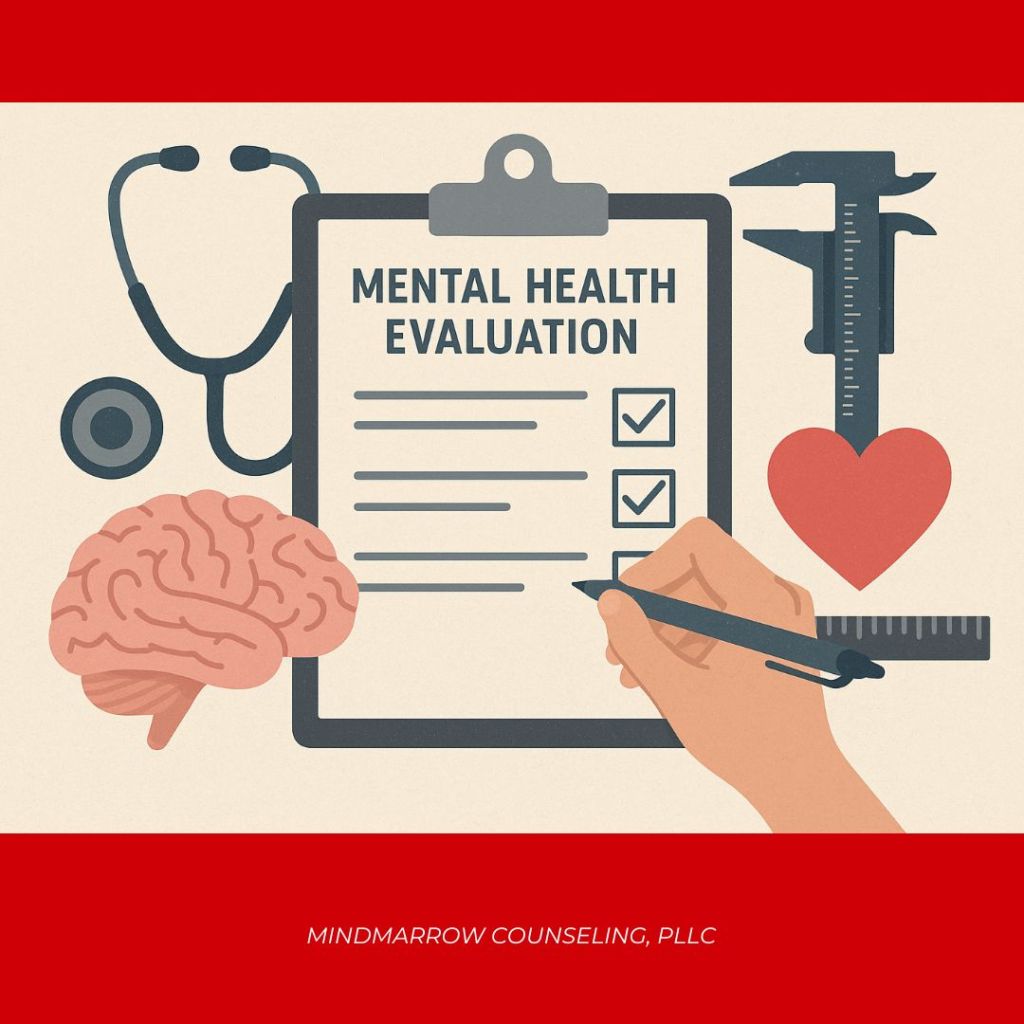
Understanding the Gaps in Mental Health Evaluation—and How to Advocate for What You Need
As a clinician, I’m required to provide a diagnosis after a thorough process that includes interviews, evaluations, assessments, and observations. Licensed master’s-level clinicians who have passed their state and national board exams are qualified to diagnose conditions as outlined in the DSM. When presentations are complex, we may consult with colleagues or refer clients to providers who may have more experience with a particular presentation. Some government or private agencies may require a diagnosis from an MD or PsyD, especially when applying for disability benefits or workplace accommodations.
It’s important to note that no personality disorder can be diagnosed before age 18—regardless of the clinician’s credentials.
Sometimes, a broader battery of tests is needed to rule out cognitive or medical issues that can mimic conditions like Autism or ADHD. For instance, symptoms could stem from a heart condition, vision condition or epilepsy rather than a neurodevelopmental disorder.
A word of caution: in my experience, no two neuropsychological evaluations are alike. For example, referring someone to Seattle Children’s versus OHSU may result in very different assessments. Even private PsyDs—who often specialize in complex cases—use varied approaches. And while a PsyD or MD holds a high level of training, that doesn’t necessarily mean they specialize in ADHD or Autism, or diagnosing these conditions in adults. It’s essential to ask whether they have specific experience and training in those areas.
I’ve read a wide range of clinical reports—some feel like fast food, rushed and lacking substance, while others resemble a thoughtful, 12-course meal with clearly presented data, careful analysis, and nuanced conclusions.
Clinics that administer comprehensive testing often acknowledge this inconsistency. Some people wait years for evaluations, while others pay thousands for poorly executed assessments simply because they were “referred out” without clarity on what was needed.
Diagnosis is both an art and a science. Much of what we observe is brief and can be influenced by a client’s desire to “perform well.” It’s crucial for clinicians to consider medical history and input from family or close observers—not just standardized tools. Many of these “gold standard” instruments were developed using data from boys and men, and currently, no true gold standard exists for evaluating ADHD or Autism in women, girls, or gender-nonconforming individuals. It has only been 15 years that clinicians are able to diagnose both ADHD and Autism in an individual, where previously the rule was to diagnose one or the other. This is no longer the case, and depending on when the clinician received their training, it is crucial that they are up to date on this. The clinician must also be comfortable diagnosing these conditions in adults as they are historically diagnosed more often in childhood.
There are many adults living with a misdiagnosis of anxiety and depression that needs to be revisited and revised with a renewed understanding that there may be an underlying nervous system dysfunction going on. This analysis is critical as both ADHD and ASD are not simply mental health diagnosis, they are full body conditions, which left unmanaged can create havoc to the physical body.
Reach out if you need help navigating the evaluation and assessment landscape – Catherine@mindmarrowcounseling.hush.com











 Mindmarrow Counseling, PLLC