
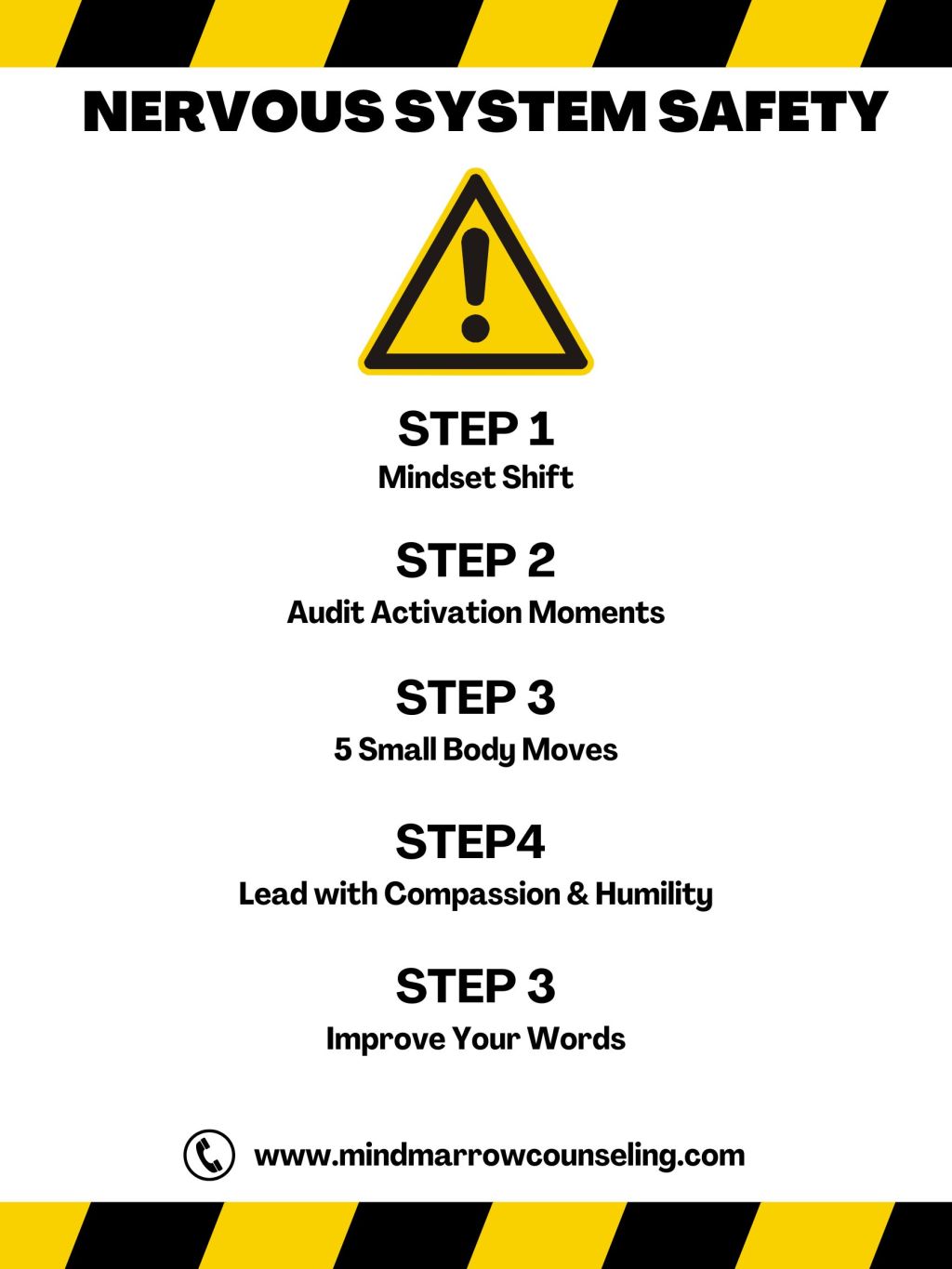
Step 1: Mindset Shift
Understand that your current mindset toward emotional confusion and behavior may not be helpful or productive. A reimagining of the root issues—and their solutions—is now required.
If you are someone, or a parent of a child, struggling with anxiety, ADHD, or ASD, recognize that dysregulated behavior is driven by the survival brain—not by goal-directed thinking. These reactions happen in a split second, often at the subconscious level. Children, and even adults, who are challenged in this way often won’t have explanations in the moment—and possibly not even afterward. This is why it’s essential to take Step 2 seriously, so you can better understand the landscape of when and where you or your child may be more vulnerable to defensive reactions.
Any time our hypersensitive nervous systems perceive a threat, the brain signals us to shut down, avoid, fight, or freeze. Unfortunately, these perceived threats are often chronic. Instead of reacting to a single moment of real danger, our systems remain in constant alert.
Step 2: Audit Your Activation Moments
Learning to identify moments of nervous system arousal (a non-regulated state) is a critical next step. Begin by paying attention to your body’s cues—such as shallow breathing, tightness in the throat or chest, or speaking rapidly. Notice when and where these occur – don’t seek the “why” and get curious about the sensory inputs during these times (e.g., are my clothes too tight, is it bright in the room, is it loud, am I in an area with lots of other stressed out humans or animals, am I tired or hungry? ).
Step 3: Identify Five Small Things You Can Do to Regulate
Since the body is having a reaction, regulation must often begin with the body and the five senses. Keep a simple list of strategies that work for you. The vagus nerve is activated when we are dysregulated, so try variations on the following to help calm your system:
- Deep breathing
- Humming or singing
- Gentle eye movements around the room
- Eye contact with a trusted person
- Smiling (even slightly)
Step 4: Lead with Humility and Compassion
Whether you’re struggling yourself or your child is, remember that we have difficulty connecting with consequences or rewards when we’re in dysregulation. The “bad behavior” is often an automatic, though inappropriate, nervous system response (e.g., panic or overwhelm).
Try to respond with kindness—toward yourself or your child—and gently reinforce the times when regulation and safety are present, such as while reading, drawing, running, hugging, or petting a dog.
Step 5: Improve the Words You Use
When our nervous systems repeatedly misfire, miscalibrate, or shut down without clear reason, we may develop an internal voice of doubt:
- “What’s wrong with me?”
- “Why did I do that?”
- “Why am I so annoying to people?”
Instead of spiraling in self-criticism and doubt, try the following words, spoken gently with a hand over your heart, head, or stomach, and a deep breath:
For yourself:
May I be safe.
May I be happy.
May I be healthy.
May I live in peace, no matter what I am given.
May my heart be filled with love and kindness.
Parents, try this too—for your child:
May you be safe.
May you be happy.
May you be healthy.
May you live in peace, no matter what you are given.
May your heart be filled with love and kindness.
And for all of us:
May we be safe.
May we be happy.
May we be healthy.
May we live in peace, no matter what we are given.
May our hearts be filled with love and kindness.









 Mindmarrow Counseling, PLLC