
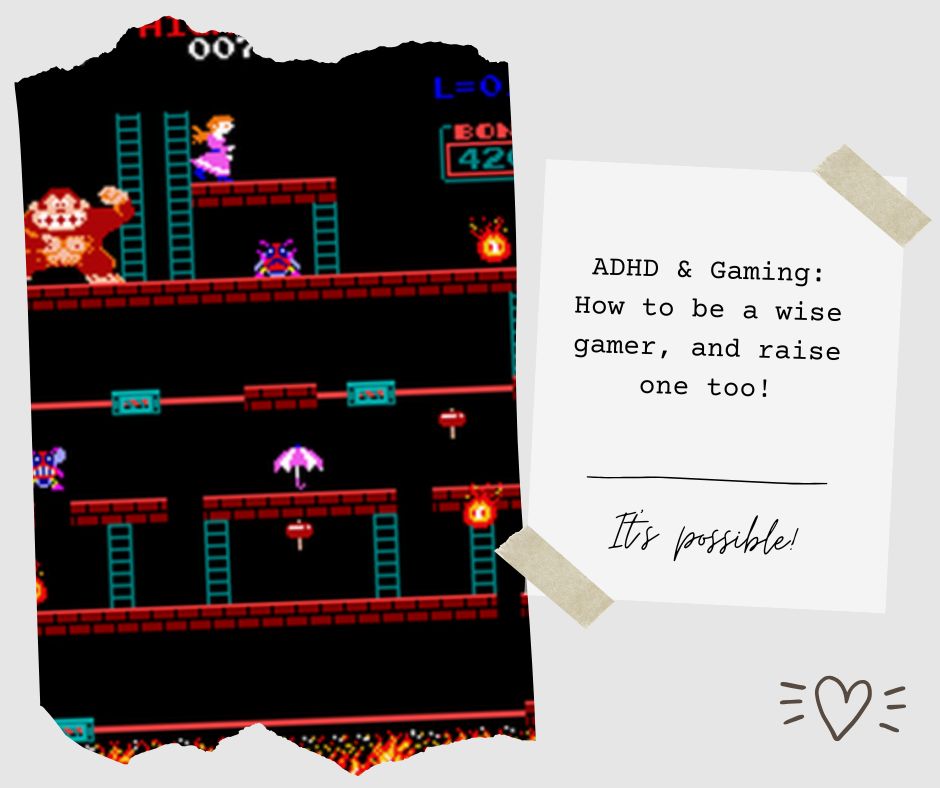
Gaming is thrilling, addictive, and relaxing all at once, especially for those with ADHD. The constant dopamine rush from screens affects everyone, but for ADHD brains, gaming can feel like a trip to the brain spa. This is both a blessing and a red flag. It is also fueled by a major industry clamoring for our brains and time that will likely be around for a very long time.
As a 12-year-old in the ’80s, I became obsessed with Donkey Kong one summer. After camp, I’d close the blinds, ignore the beach, and play non-stop. The experience was so intense that I never played video games again after that 4-5 week period. It left me wondering what on earth happened to my brain that summer, sparking my fascination with neuroscience and human behavior. I even wrote about the muscles behind the movement, essentially articles about publicly-traded video game companies in the early 2000s.
WHY GAMING IS SO ENGAGING (ESPECIALLY FOR ADHD)
- Reinforces Impulsivity: Games provide immediate rewards, reinforcing impulsive behavior. For those with ADHD, this fuels a cycle of instant gratification that worsens attention and impulse control issues.
- Difficulty Focusing on Non-Stimulating Tasks: Games are designed to capture attention through fast-paced, visually stimulating content. This contrasts with slow, unengaging tasks like schoolwork, making it harder for ADHD individuals to focus on less stimulating tasks.
- Addiction Risk: The highly engaging nature of modern games can lead to addictive behaviors, exacerbating challenges with time management, social interactions, and responsibilities.
- Poorer Academic & Social Outcomes: Excessive gaming can interfere with academics, sleep, and social interactions, limiting time for activities that help manage ADHD symptoms, like physical exercise or structured routines.
FINDING BALANCE
To enjoy the flow state gaming provides, it’s crucial to set boundaries. We need to actively ensure gaming doesn’t interfere with the activities that will decrease ADHD symptoms including physical activity, mindfulness, and social connection. Choose games carefully, especially survival mode games, which make stopping at a set time really difficult. If setting limits becomes too difficult, and the you find yourself neglecting key areas of your life for gaming consider seeking professional help—gaming disorders are real.
PARENTS
For parents of ADHD children, set clear limits and consequences around gaming. Understand that games are enjoyable and can provide a space for learning and socializing. Get curious about the games your child enjoys, and familiarize yourself with video game rating systems. Also understand that some games are much harder to stop playing, including those with “loot” or “survival” modes. Your gamer will be Abel to educate you on all of their favorite games.
Create rules with your child where chores and homework must be completed before gaming. Use visual countdowns, and as your child follows limits, gradually increase their playtime as appropriate. Provide positive reinforcement for compliance and responsible choices. Avoid struggles during transitions; instead, calmly say, “For every extra minute today, tomorrow’s playtime will be shorter by that time.”
If your child hides or lies to play, impose a consequence like a few days without gaming. Time limits should be age-appropriate—about 30 minutes a day for younger kids, increasing time on weekends. According to the Academy of Pediatrics, children six years and over are recommended to spend no more than 1 hour on video games per school day and no more than two hours on a non-school day. 30 minutes of video game time is the max amount recommended for children under six-years old.
While you might not be as savvy with video games you can still engage in conversations with your child about the challenges related to “game over” time and related feelings. Educate your child on how excessive gaming can worsen ADHD symptoms. You might consider locking up remotes when not in use to remove any temptation to access without supervision.
Lastly, model good screen habits. Children learn by example, so set boundaries for your own screen time. Consider creating a family media plan with tech-free zones and times.
Nature does not like a void, so when reducing screen time either through consequence or other reason, create a list of non-screen activities for when gaming privileges are lost or to replace screen time. Healthy gaming is possible, but it requires structure, especially for the ADHD mind.













 Mindmarrow Counseling, PLLC